
Elmshorn im Porträt: Geschichte, Einwohner, Wirtschaft und Verkehr der größten Stadt im Kreis Pinneberg und was der Umzug des Arbeitsgerichts für Beschäftigte bedeutet.
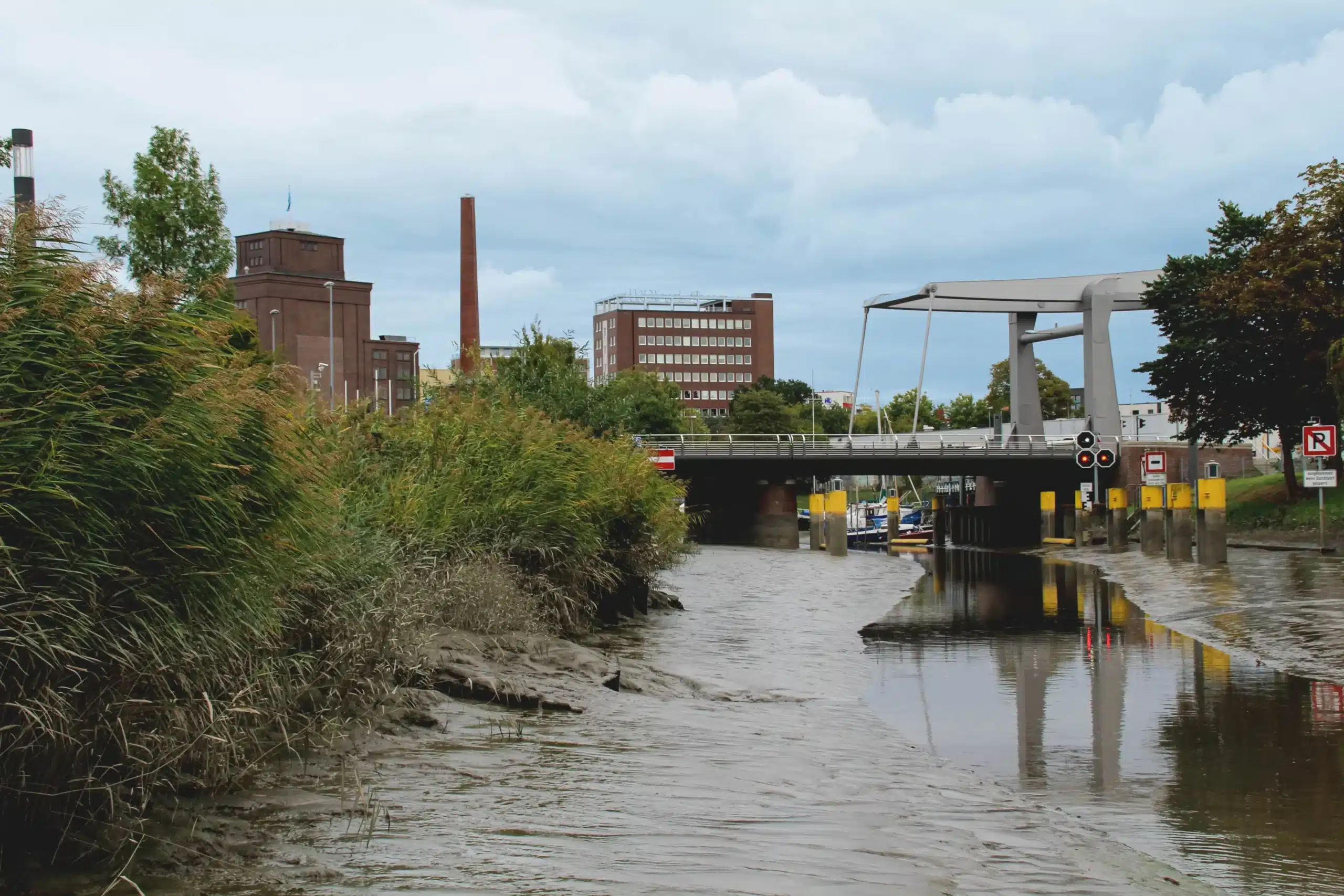
Wer mit dem Regionalzug von Hamburg nach Norden fährt, hält in Elmshorn fast immer. Viele steigen hier nur um. Dabei lohnt sich der Blick auf eine Stadt, die zugleich Wohnort für Pendler, Industriestandort und Einkaufsziel für das Umland ist. Wir haben unsere Kanzlei in Elmshorn und erleben jeden Tag, welche Fragen Menschen hier beschäftigen, vom neuen Arbeitsvertrag bis zur Eigentumswohnung.
Am bekanntesten ist Elmshorn wohl durch einen Namen, der in vielen Küchenschränken steht: Peter Kölln stellt hier seit Generationen Haferflocken und Müsli her. Daneben haben Das Futterhaus, Teppich Kibek und die Confiserie Wiebold ihren Sitz in der Stadt. Wer durch die Innenstadt geht, sieht die Nikolaikirche, das wichtigste historische Bauwerk, und den Wasserturm von 1902. Am Krückau-Hafen erinnern die Museumswerft und die Käpten-Jürs-Klappbrücke an die Zeit, in der Elmshorn eine Hafen- und Werftstadt war.
| Merkmal | Elmshorn |
|---|---|
| Einwohner | rund 50.000 |
| Kreis | Pinneberg, Sitz der Kreisverwaltung |
| Lage | an der Krückau, rund 30 km nordwestlich von Hamburg |
| Erste Erwähnung | 1141 als „Elmeshorne“ |
| Stadtrecht | seit 1870 |
| Bahn | Strecke Hamburg-Altona nach Kiel, Beginn der Marschbahn, AKN nach Barmstedt |
| Straße | A 23 und B 431 |
| Nahverkehr | im HVV-Tarif seit 2002 |
Der Ortsname taucht 1141 erstmals als „Elmeshorne“ auf, auf Plattdeutsch sagte man Elveshorn oder Elmshoorn. Lange war Elmshorn ein Flecken mit Kirchspiel, Hafen und Handel. Das Stadtrecht kam 1870. Mit der Eisenbahn und den Betrieben am Hafen wuchs die Stadt. Heute ist die Hafenbahn stillgelegt, der Hafen aber erhalten und Teil einer neuen Innenstadt am Wasser.
Elmshorn ist in Quartiere wie Kaltenweide, Langelohe und Hainholz, Klostersande und Lieth, Fuchsberg sowie Mitte und Flamweg gegliedert. Weil Elmshorn im HVV-Tarif liegt und die Regionalzüge Hamburg schnell erreichen, ist die Stadt für viele Pendler eine Alternative zur Großstadt. Für Mieter heißt das oft: Eigenbedarfskündigung, Mieterhöhung oder Streit um die Kaution treffen auf einen Markt, in dem Ersatz schwer zu finden ist. Für Käufer und Verkäufer stellen sich Fragen zur Maklerprovision und zu Angaben im Exposé.
Lebensmittelhersteller, Handel, Logistik, Stadtwerke und Sparkasse sind große Arbeitgeber, dazu kommen Pflege, Handwerk und viele kleine Betriebe. Viele Elmshornerinnen und Elmshorner pendeln außerdem täglich nach Hamburg. In Gesprächen mit Beschäftigten aus der Region hören wir immer wieder ähnliche Situationen:
Bisher war für Arbeitsrechtsstreitigkeiten aus Elmshorn und dem Umland das Arbeitsgericht Elmshorn zuständig. Mit der Fachgerichtsstrukturreform in Schleswig-Holstein wird es zum 1. März 2027 aufgelöst. Sein Bezirk geht auf das Arbeitsgericht Lübeck über, das in Itzehoe im Gebäude des Sozialgerichts auswärtige Kammern einrichtet. Laufende Verfahren werden dort fortgeführt. Der Gerichtstag in Meldorf entfällt schon zum Jahresende 2026.
Für Beschäftigte ändert sich an den Fristen nichts. Wer eine Kündigung erhält, muss weiterhin innerhalb von drei Wochen Kündigungsschutzklage erheben. Wichtig ist nur, die Klage beim richtigen Gericht einzureichen. Verhandelt wird künftig in Itzehoe statt in Elmshorn, was für viele einen längeren Weg bedeutet.
Die Kanzlei Hartun & Killet berät von Elmshorn aus und in Hamburg:
Sie haben eine Kündigung erhalten oder Ärger mit Vermieter oder Makler? Warten Sie nicht ab, bis Fristen verstrichen sind. Rufen Sie uns an: 04121 7800030.
Teilen



Rechtsanwalt Elmshorn & Hamburg | Arbeits-, Straf- & Mietrecht | Kanzlei Hartun & Killet
We firmly believe that the internet should be available and accessible to anyone, and are committed to providing a website that is accessible to the widest possible audience, regardless of circumstance and ability.
To fulfill this, we aim to adhere as strictly as possible to the World Wide Web Consortium’s (W3C) Web Content Accessibility Guidelines 2.1 (WCAG 2.1) at the AA level. These guidelines explain how to make web content accessible to people with a wide array of disabilities. Complying with those guidelines helps us ensure that the website is accessible to all people: blind people, people with motor impairments, visual impairment, cognitive disabilities, and more.
This website utilizes various technologies that are meant to make it as accessible as possible at all times. We utilize an accessibility interface that allows persons with specific disabilities to adjust the website’s UI (user interface) and design it to their personal needs.
Additionally, the website utilizes an AI-based application that runs in the background and optimizes its accessibility level constantly. This application remediates the website’s HTML, adapts Its functionality and behavior for screen-readers used by the blind users, and for keyboard functions used by individuals with motor impairments.
If you’ve found a malfunction or have ideas for improvement, we’ll be happy to hear from you. You can reach out to the website’s operators by using the following email
Our website implements the ARIA attributes (Accessible Rich Internet Applications) technique, alongside various different behavioral changes, to ensure blind users visiting with screen-readers are able to read, comprehend, and enjoy the website’s functions. As soon as a user with a screen-reader enters your site, they immediately receive a prompt to enter the Screen-Reader Profile so they can browse and operate your site effectively. Here’s how our website covers some of the most important screen-reader requirements, alongside console screenshots of code examples:
Screen-reader optimization: we run a background process that learns the website’s components from top to bottom, to ensure ongoing compliance even when updating the website. In this process, we provide screen-readers with meaningful data using the ARIA set of attributes. For example, we provide accurate form labels; descriptions for actionable icons (social media icons, search icons, cart icons, etc.); validation guidance for form inputs; element roles such as buttons, menus, modal dialogues (popups), and others. Additionally, the background process scans all the website’s images and provides an accurate and meaningful image-object-recognition-based description as an ALT (alternate text) tag for images that are not described. It will also extract texts that are embedded within the image, using an OCR (optical character recognition) technology. To turn on screen-reader adjustments at any time, users need only to press the Alt+1 keyboard combination. Screen-reader users also get automatic announcements to turn the Screen-reader mode on as soon as they enter the website.
These adjustments are compatible with all popular screen readers, including JAWS and NVDA.
Keyboard navigation optimization: The background process also adjusts the website’s HTML, and adds various behaviors using JavaScript code to make the website operable by the keyboard. This includes the ability to navigate the website using the Tab and Shift+Tab keys, operate dropdowns with the arrow keys, close them with Esc, trigger buttons and links using the Enter key, navigate between radio and checkbox elements using the arrow keys, and fill them in with the Spacebar or Enter key.Additionally, keyboard users will find quick-navigation and content-skip menus, available at any time by clicking Alt+1, or as the first elements of the site while navigating with the keyboard. The background process also handles triggered popups by moving the keyboard focus towards them as soon as they appear, and not allow the focus drift outside it.
Users can also use shortcuts such as “M” (menus), “H” (headings), “F” (forms), “B” (buttons), and “G” (graphics) to jump to specific elements.
We aim to support the widest array of browsers and assistive technologies as possible, so our users can choose the best fitting tools for them, with as few limitations as possible. Therefore, we have worked very hard to be able to support all major systems that comprise over 95% of the user market share including Google Chrome, Mozilla Firefox, Apple Safari, Opera and Microsoft Edge, JAWS and NVDA (screen readers).
Despite our very best efforts to allow anybody to adjust the website to their needs. There may still be pages or sections that are not fully accessible, are in the process of becoming accessible, or are lacking an adequate technological solution to make them accessible. Still, we are continually improving our accessibility, adding, updating and improving its options and features, and developing and adopting new technologies. All this is meant to reach the optimal level of accessibility, following technological advancements. For any assistance, please reach out to